Communicative grammar

  • Home
  • About
  • My CV
  • Education
  • Learning
  • Active learning
  • Teaching
  • Teaching Tools
  • Teaching Topics
  • Teaching Methods
  • School Activities
  • Curriculum-Culture
  • Assessment - Evaluation
  • Classroom Management
  • Century Skills
  • Language Skills
  • Linguistics
  • Grammar
  • Publications-Achievements
  • Business Lectures
  • My Blog
  • Contact
  • Abouna Fanous Site


1-Teaching grammar communicatively


   2-Teaching vocabulary communicatively


Communicative grammar Part 17 Revision of tenses - 2 - YouTube


Go to my Blog


https://mrgirgis.blogspot.com/


Mr. / Girgis


Click here to go to : Abouna Fanous Site.


موقع عمى أبونا فانوس الأنبا بولا


email-logo – Jenny Brook Bluegrass


E-mail  1  :  girgishannaharoun@yahoo.co.uk


  E-mail    2  : girgishanna027@gmail.com


اضغط هنا لتصل الى فيديوهات موقع ابونا فانوس و تنال بركته


Translate This Page


And now these three remain: 

faith, hope and love.


But the greatest of these is love.1

 Corinthians 13:13


free-clipart-important-notice-9 | Chippewas of the Thames


Humor


Girl Laughing Hysterically Stock Photo ...


School is practice for 

future life,


practice makes perfect and

nobody's perfect, so why

practice?

Dear visitor,


Use the language selector above to go

 through my whole site using any native

 language you speak,

then you can enjoy my YouTube 

channel.


اختاراي لغة من لغات العالم /  اللغة التى تريد تصفح

 موقعى باستخدامها . استخدم المؤشر

ا

لذى فى الاعلى


I register a  video presentation in my

YouTube channel for each page of 

my site.


Next,use the other world site selector 

above to go to the search engine site

 or the social media site you like.


My YouTube Channel:


منهج الانجليزى ثانوية عامة / و شكل و طريقة امتحا ن


نظام التعليم الجديد  والتصحيح


الكترونيا


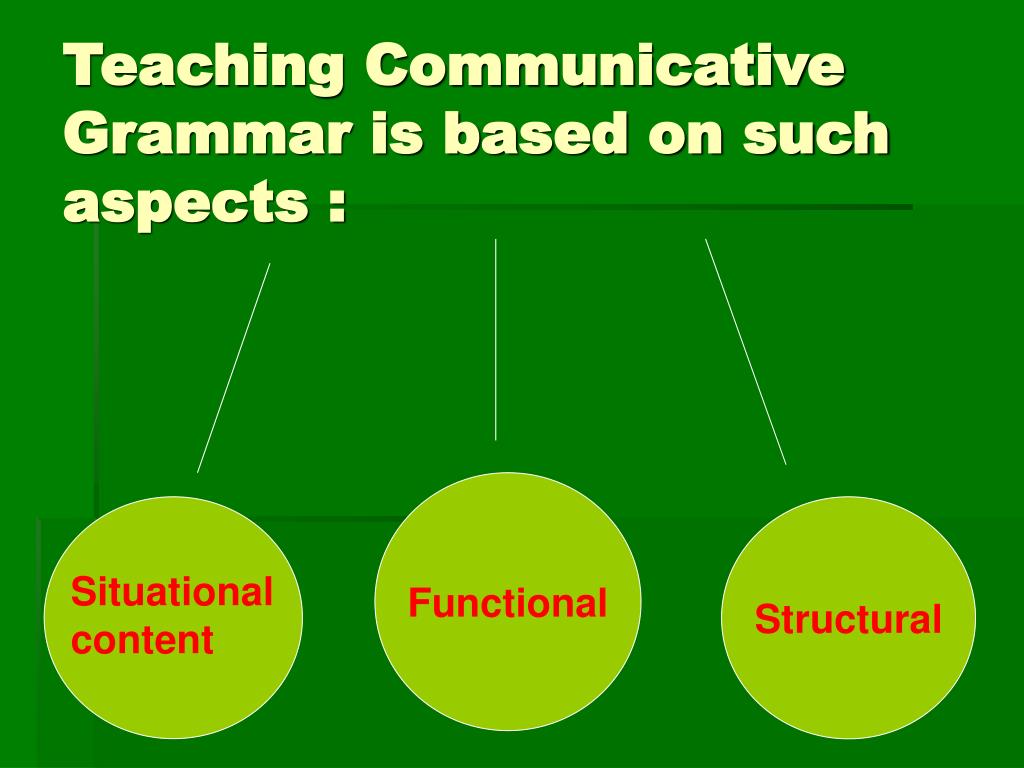
1-Communicative Grammar


The key to communicative grammar is presenting

 language in a manner that corresponds with the ways

 that our brains actually process and encode language

 rather than lists and explanations that decontextualize

 grammar  nebulous grouping of rules that seemingly 

contradict each other and have nothing to do with the 

way we actually think.


What is a communicative grammar?


Communicative grammar puts the accent on the

 actual act of communication. It gives the speaker

 all the tools for an effective transmission of the intended

 message. ... In traditional grammar the words are

 categorized into parts of speech, which you combine

 in sentences, by following certain rigid rules.
.


Role of grammar in 

communicative language teaching?


A communicative grammar lesson allows students to

practice the target grammar. The beginning stages of a

communicative grammar lesson often focus on accuracy

while fluency becomes more important during the 

practice stage. ... Language teachers ideally want their 

students to practice using language communicatively.


Relevant topics:


Click here to go to online English Grammar and

vocabulary tests with automated scoring, online, too.


1-English Grammar.


2-English vocabulary.


3-English collocations


4-English Slangs.


5-English idioms and phrasal verbs.


6-English Business vocabulary.


Four Meaningful Ways Students Can Contribute | KQED


How it is functioned


Meaning (function) is emphasized . Contextualization

 is important Language learning is learning to

communicate. Language is created through repeated

 trials and errors. Fluency is primary whereas accuracy

 is secondary.


Communicative Grammar Lesson


Traditional grammar teaching starts with the teacher's


 statement of the grammatical point on the board.


 Integrated grammar teaching is a unique and an


authentic approach because it implements the pre-,


while- and post-stages. The application of pre-, while-


and post-stages into teaching grammar are shown


 below in two sample grammar lessons.


How can grammar be taught effectively?


Use authentic examples from authentic texts. ...

Use grammatical terms but explain them through

examples. Encourage language play, experimentation

and risk taking. Encourage high-quality discussion 

about language and effects.


Classroom activities

Typical activities of this approach are:

games, problem-solving tasks, and role-play.

There should be information gap, choice and feedback

involved in the activities. Learners must have constant

interaction with and exposure to the target language.


How a modern school enables 24/7 learning - Insync Technology


                                Model: 1


                                 / Used to/


1. Pre-grammar


a)  The teacher discusses the topic:

 "Changes in people over the years"

b)  The teacher shows two pictures of a woman.

One picture was taken 20 years ago and the other

 one is new. The old picture shows her playing the

guitar while the new one displays her painting pictures.

The teacher then asks them to compare the two pictures.


2.   While-grammar


a)  This stage provides a context for input 

generation and an opportunity to notice the new 

grammatical structure. The teacher tells them 

they are going to learn a new structure (for the

 purpose of noticing)but does not mention the 

name of  structure  (for motivational purposes).


b)  The teacher makes a transition from the 

contextcreated in 1b to the grammatical point

 by showing the same pictures and telling the 

picture differenceswith "used to" and "simple 

present tense" (i.e. "She used to play the 

guitar as a hobby, but now she doesn't, she 

paints pictures as a hobby now", etc).


c)  The teacher creates other contexts for the

 teaching of grammatical point through some

other picture comparisons, discussions, stories,

or reading/listening texts.


d)  The teacher asks some clarification check

 questions to ensure that the meaning is clear.

Some  examples:


Did she often play the guitar in the past?/

Does she play the guitar now?

Did she often paint pictures in the past?/

Does she paint pictures now?

Did she have long hair in the past?

/Does she have long hair now?


e)   The teacher asks the students to formulate

 the rule on the board for the given sentence

 providing help if needed.

       She   used to     play the guitar.

       S  +  Used to + V 1 …


(Note: The while-stage may involve production of

the new structure through some questions about the

pictures. In this case, however, the purpose is to 

confirm whether the meaning has been clarified.)


Ask Elaine: Five Steps to Teaching Grammar – Work/Life English


3) Post-grammar


Brainstorming


The teacher asks students to think back to when they

were a child and asks the following questions:

 "What are the differences and similarities between

 your life then and now?


Think about where you lived, your likes/dislikes, your

 holidays and your family, and fill in the following lines

 with appropriate sentences".


Your life as a child...

________________________________________
________________________________________
________________________________________

Your present life...

________________________________________
________________________________________
________________________________________


Role-play


The teacher forms pairs of students and gives a role

 play to each student. The role playing students are

supposed to be old friends meeting after a long time.


They are supposed to communicate and note the

differences in each using either their imagination or

 the role play cues.


Writing


The teacher asks students to write a story about the

following topic for the school magazine.  Imagine that

 you have been asleep from 2018 till 2070.


You have just woken up to be shocked about 

everything around you. Compare your old and new 

lives and write your story using "used to".


PPT - PEREVALA OLGA PowerPoint Presentation, free download - ID:6852900


Model : 2


The present perfect passive voice


Pr-grammar Stage


First, the teacher has a discussion on burglaries. 

Following this discussion, the teacher shows a picture 

of a living room and says: "Today, a burglar has broken

 into this room.

What do you think he has taken?" (The teacher tries to

elicit responses such as he has taken the lap-top

computer, he has stolen the jewellery, etc ).


While-grammar Stage


The teacher shows a different picture of the same living

room and turns attention to the missing items

and says the following:


"The lap-top computer has been taken from the room.

The jewellery has been stolen.

The small TV has been taken as well.

The picture on the wall has been taken, too".


The teacher asks questions to elicit the passive voice

 structure. Following this, the teacher asks clarification

 check questions such as:


What is the difference between "the burglar has

stolen the jewellery", and "the jewellery has been

stolen"?; when do you think we need the second

 structure?, etc.


The teacher asks the students to formulate the rule on

 the board.Alternatively, or additionally, the context can 

be created through a reading text written in the present

 perfect passive voice.


Post-grammar Stage


The teacher gives the following hand-out to be filled out

 and asks students to walk around and ask questions

to the class members.


Find someone   Class member's name
                                                        
                                            
who has been blamed for something he/she hasn't done.

who has been disappointed by a close friend.

who has been told some good news today.

who has been told some bad news today.

who has been abandoned by his/her girlfriend/boyfriend.

who has been misunderstood today.

who has been forgiven by an old friend recently.

who has been given a present today.


Role-play


The teacher forms pairs of students and gives a role

play to each student. One of the pairs holds the names

 of the cities and their weather reports, the other holds

information about some football matches and the name

 of the cities where they are being held. They will 

exchange the information and find out which football 

matches have been cancelled.


The teacher assigns an incomplete writing task and

asks them to complete it using some cue words and

 the present perfect passive tense as in the following:


Your wedding is very soon, but most of the 

arrangements have not been made yet. Write a 

complaint letter to the wedding specialist using these

 clues: wedding invitations, wedding dress, wedding 

party, wedding cake, wedding photographer,


Model:   3                                                                          


Structures:


(To be fond of)


Drill through pair work practice.


Guided practice model:


 (Volleyball )


 Student 1:        / What sport are you fond of?   /


Student 2:      / I am fond of.......................,......./


Free practice:


Starting pattern practice, then moving into


communication practice.


Learners communicate using the same


 prompts with new patterns in pairs:


                                     /..........................Basketball/


                                  /.............................Handball /


                               /.................................Boules /


                            /..................................Cricket / 


Elicitation:


 I ask the following questions and


elicit the answers:


1- My learners, Can I elicit the structure


from you?


2-What repeated words have you


discovered through your practice?


3-What comes before?


 What comes after?


Then, what is the the rule form?


Communicative Language Teaching | Article | Onestopenglish


Conclusion:


During grammar instruction, teachers should provide

meaningful input through context and provide an

 opportunity to put grammar to use, and relate

grammar instruction to real life situations.


This is best achieved if grammar instruction is treated 

in the same way as the teaching of the four skills which

 involves smooth and organized transitions of pre-,

 while and post grammar stages.


View other resources:


1-Speaking.


2-Pair Work


3-Conversation.


4- CLT Method.


5-) Cultures


6-) Prepositions.


7-Englisgh Grammar


8-Communication ptactice


9-Click here to contact me

Teaching Forum 2007,


Volume 45, Number 1


1-  Critical Thinking


2-Exploring the Content of Movies


3- Teacher Trainees


4-Reflection  for Action Research


5-Project Proposal Writing


6- Reminders of History and Heritage


7-Poetry Corner


8-The Lighter Side   


Tweet

Make a free website with Yola