Cultures

  • Home
  • About
  • My CV
  • Education
  • Learning
  • Active learning
  • Teaching
  • Teaching Tools
  • Teaching Topics
  • Teaching Methods
  • School Activities
  • Curriculum-Culture
  • Assessment - Evaluation
  • Classroom Management
  • Century Skills
  • Language Skills
  • Linguistics
  • Grammar
  • Publications-Achievements
  • Business Lectures
  • My Blog
  • Contact
  • Abouna Fanous Site


Cultures


Top Resources to Teach About Cultural Diversity In The Classroom


Mr. / Girgis


Go to my Blog


https://mrgirgis.blogspot.com/


Click here to go to : Abouna Fanous Site.


موقع عمى أبونا فانوس الأنبا بولا


email-logo – Jenny Brook Bluegrass


E-mail  1  :  girgishannaharoun@yahoo.co.uk


  E-mail    2  : girgishanna027@gmail.com


اضغط هنا لتصل الى فيديوهات موقع ابونا فانوس و تنال بركته


VK8GFP9HFt9BbBrZe58JpDvB9NEdhFIgtrOB-I8YcSjs9DNu9yWv_6L9Qb-bnK0v.jpg

Translate This Page


Consider it pure joy, my brothers

and sisters, whenever you face

trials of many kinds.      James 1


free-clipart-important-notice-9 | Chippewas of the Thames


Humor:


Girl Laughing Hysterically Stock Photo ...


Teacher: I hope I didn't see 

you looking at Maria's 

answers.


Student: I sure hope you 

didn't, either!

Dear visitor,


Use the language selector above to

 go through my whole site using

 any native language you speak,

then you can enjoy my YouTube 

channel.

اختاراي لغة من لغات العالم /  اللغة التى تريد 

تصفح موقعى باستخدامها . استخدم المؤشر

الذى فى الاعلى


I register a  video presentation in 

my YouTube channel for each

page of my site.


Next,use the other world site 

selector above to go to the search 

engine site or the social media site

 you like.


My YouTube Channel:


منهج الانجليزى ثانوية عامة / و شكل و طريقة امتحا ن 

نظام التعليم الجديد  والتصحيح 

الكترونيا


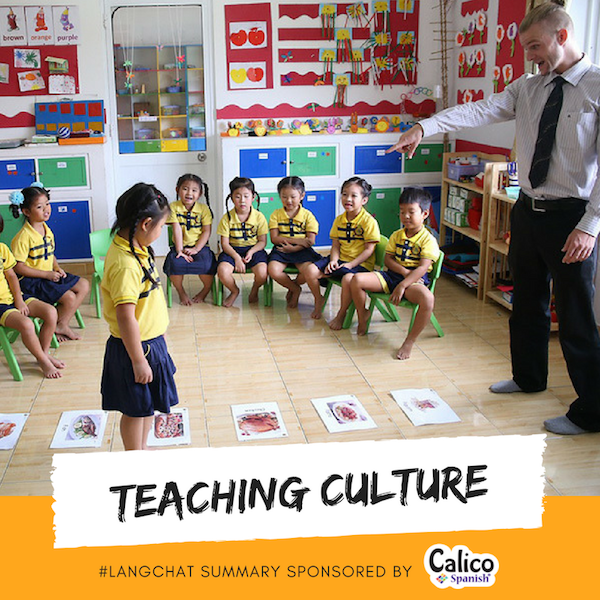
Teaching Culture - Calico Spanish


Countries and Nations:


Learning about a foreign language is not enough to 

know about other peoples and other countries.

 It is very important to know about the culture, values,

 customs, traditions, ways of thinking and the ways of

living of the people whose language you are studying

about. Knowing about cultures facilitate the mutual

understanding among peoples. 


 Mutual understanding creates good ties and relations

 on the standard of individuals, peoples and countries.

Good relations lead to solving problems, ending wars

 and spreading love, tolerance, peace and happiness

all over the world.


How does culture impact our ability to learn?


Importance of Diversity & Cultural 

Awareness in the Classroom


In our increasingly diverse and multicultural society,

 it’s more important than ever for teachers to 

incorporate culturally responsive instruction in the 

classroom -- whether teaching elementary school, 

middle school or high school students.


And the increase of diversity doesn’t only relate to race

 and ethnicity; it can include students of different 

religion, economic status, sexual orientation, gender 

identity, and language background.


Learning and Learners:


This includes knowing about innate personality

traits we call “style” and also learned cultural values that 

affect behavior.


The learner, of any age, is a product of nature and

nurture. We each are born with predispositions for

 learning in certain ways.


We also are products of external influences, especially

within our immediate family, extended community, and

culture. Researchers confirm that learning patterns are a 

function of both nature and nurture,


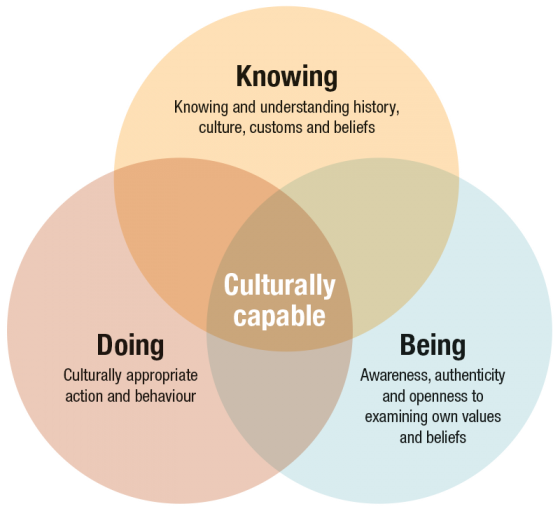
A venn diagram of the cultural capability framework. One circle says "doing"  and underneath 'culturally appropriate action & behaviour'. Another circle says "Being" and underneath, Awareness, authenticity and openness to examining own values and belief. The last circle says Knowing, beneath, knowing and understanding history, culture, customs and belief. They all come together to  say "Cultural Capability" in the middle


Why is it Important to Encourage


 Diversity in Schools ?


Fostering inclusion and awareness around 

multicultural education and taking a culturally 

responsive approach to teaching benefits all 

students.


 Not only does creating greater multicultural 

awareness and inclusion help students with

backgrounds and needs succeed,

 but it encourages acceptance and helps prepare 

students to thrive in an exponentially diverse world.


Diversity in and out of the classroom will continue

 to grow, so it’s essential we prepare students to

 adapt to an evolving world and embrace those

 different from themselves.


How do you Manage Diversity in


 the Classroom?


There are several ways teachers and administrators,

such as principals and coaches, can ensure that both

the classroom environment and curriculum are

 responsive to the increasing cultural diversity of our

society.


These strategies will encourage all students’ cultural

awareness, enhancing each student’s sense of identity,

 and foster inclusion in the classroom community.


Get to Know Your Students


Ensuring that cultural awareness is promoted in the

 classroom starts with the teacher understanding each

 individual student. Take the time to learn about each

 student’s cultural background, hobbies, learning styles,

 and what makes them unique.


Demonstrating a genuine interest in learning about 

each student and their culture will help establish trust 

and allow you to form a bond with them so they feel 

valued.


If students feel appreciated by and comfortable with 

the teacher, there’s a better chance they’ll feel 

comfortable talking with and respect their peers in the 

class – and communication is the core to a culturally 

aware and inclusive classroom.


Maintain Consistent Communication


Aside from getting to know your students, teachers

should also continue to maintain ongoing 

communication throughout the semester or school year.


Scheduling 1-on-1 meetings with students to “check in”

every so often will allow you to consistently improve

how accessible the classroom is to everyone.

Students can talk about whether they felt included in

the classroom culture.


Acknowledge and Respect Every Student


It’s also important for students to celebrate and

respect their own diverse backgrounds, as well as

each other’s. When appropriate, teachers should

encourage students to research and learn about their

 own ethnic and cultural backgrounds. This allows 

them to better understand their own culture as well 

as the differences and nuances with their peers.


As a bonus, this can be a great ice breaker 

assignment, allowing students to give presentations 

about their family traditions and culture to help expose

 the class to concepts outside of their own familiar 

comfort zone.


Acknowledging these differences and creating a safe

 space for discussion helps promote understanding in

the classroom and beyond. 


Also, as you encourage students to learn about their

 diverse backgrounds, remember to take the time to

highlight what’s offensive and the distinction between

cultural celebration and appropriation. Learning how to

 talk about other cultures in a respectful, mature way is

 essential for success in life outside the classroom.


Practice Cultural Sensitivity


While it’s important to keep an open dialogue amongst

 students, it’s equally as important to make sure you’re

 being sensitive to everyone’s culture, beliefs, and

language concerns. Take the time to understand each

 student’s cultural nuances – from learning styles to the

 language they use – and use these insights to design

 your lesson plans.


For example, provide English language learners with

appropriate and relevant resources that help them

 improve their English comprehension skills.

Rather than teach with a traditional lecture style,

create learning experiences that are more interactive

 and require collaboration.


Incorporate Diversity in the Lesson Plan


The classroom environment is important for fostering

cultural awareness, but you also should ensure 

diversity is represented in your actual lesson plan.

For example, broaden history lessons so that they

encompass the world beyond United States history

and culture. Or, use references and analogies to other

cultures in your lessons and assignments to help

students with diverse backgrounds personally connect.


Another great strategy is bringing in diverse speakers

to add varying points of view and real-life context to

 different subjects.There are several ways you can

ingrain cultural awareness and diversity into your 

lesson plan, and it will vary depending on the cultures

represented in your classroom and the course

you’re teaching.


Regardless of the subject, always try to present and

connect lessons to real-world issues. It’s easier to

promote cultural awareness within your lessons .


Give Students Freedom and Flexibility


Teachers often feel like they need to take on a strict,

 authoritative approach when it comes to managing

 their classroom. The most valuable lessons are often

learned through a student’s own experiences, so giving

 them some freedom in the course encourages more

connection to the curriculum.


Allow students to read and present their own materials

 that relate to the fundamental lesson so they can

approach the topic from their own perspective.

As a teacher, you can act as a facilitator and 

encourage conversation and healthy debate between 

diverse opinions.


Group assignments are also a great way to expose

 students to diverse perspectives, allowing them to

work together to explore and solve a problem.

 This will also help prepare them for a diverse 

workforce where they’ll have to partner with a range

 of people to accomplish their professional goals.


Corporate Culture – News, Research and Analysis – The Conversation – page 1


Why is it Important to Teach Culture


It is important to remind ourselves why diversity

 and cultural awareness is so crucial in the classroom

and the benefits it can have on students now and in

the long-term.


Teaching diversity exposes students to various cultural

 and social groups, preparing students to become 

better citizens in their communities. These culturally 

responsive teaching strategies will help you to 

promote diversity in the classroom.


Students Become More Empathetic


Promoting awareness and creating a personal 

connection with diverse cultures in the classroom can 

prevent students from developing prejudices later in life.


It allows them to empathize with people different

from themselves since they’re more aware of the

experiences someone of a different race or cultural

 group may face.


Students Gain a Better Understanding


of Lessons and People


When working and learning with people from a variety

of backgrounds and cultures present in the classroom,

students gain a more comprehensive understanding of

 the subject matter. It also teaches students how to use

their own strengths and points of view to contribute in a

diverse working environment.


Students Become More Open-Minded


Naturally, by exposing students to a diverse range

 of opinions, thoughts, and cultural backgrounds,

you’re encouraging them to be more open-minded

 later in life. This will make them open to new ideas

and be able to attain a greater comprehension on a

 topic by taking in different points of view.


Students Feel More Confident and Safe


Students who learn about different cultures during their

 education feel more comfortable and safe with these

 differences later in life. This allows them to interact in

a wider range of social groups and feel more confident

 in themselves as well as in their interactions with others.


Students Are Better Prepared for


 a Diverse Workplace


With the rise of globalization, it’s more important to be 

able to work with people from different cultures and 

social groups.If students are exposed to diversity and 

learn cultural awareness in the classroom, it sets them

 up to flourish in the workforce.


English Songs:


1-Sing Out Loud Children's Songs


2-The Alphabet Song


3-Over the River and Through the Woods


4-I'm a Little Teapot


5-Hickory Dickory Dock


6-Twinkle, Twinkle, Little Star


7-Mary Had a Little Lamb


8-One, Two, Buckle My Shoe


9-Bingo


10-Hush Little Baby


11-The Happy Song


12-Head, Shoulders, Knees, and Toes


13-Are You Sleeping?


14-Hokey Pokey


View Resources:


1-The USA Culture


2-The UK  Culture


3-English Proverbs


4-Teaching diverse and multi-cultured


Other links:


1-Back


2-Business English. 


3-Impact of culture on learners'  learning.


4-Click here to go to World  Newspapers


5-Click here to learn about more proverbs.


8-Story Jokes for real communication

More Resources:


1- Learning / Pedagogy  /  Assessment.


2-Education and development. 


3-Language communication research.


4-Education for sustainable development.

View resources:

1-Funny Stories.


2-Teaching songs.


3-School activities.


4-Fun with Alphabets.


5-Classroom Activities.

7-Pums, puzzles and Riddles.


Flag Counter


Tweet

Make a free website with Yola