Courses and Levels of English

  • Home
  • About
  • My CV
  • Education
  • Learning
  • Active learning
  • Teaching
  • Teaching Tools
  • Teaching Topics
  • Teaching Methods
  • School Activities
  • Curriculum-Culture
  • Assessment - Evaluation
  • Classroom Management
  • Century Skills
  • Language Skills
  • Linguistics
  • Grammar
  • Publications-Achievements
  • Business Lectures
  • My Blog
  • Contact
  • Abouna Fanous Site


Courses and Levels 


of 


English.


English courses (@Englishcourses2017) • Facebook


Mr. / Girgis H. H. A.


East Anglia University,

 Norwich, Norfolk, East Anglia,

 England, UK.


1-Master Degree.

2-Freelance PhD


Click here to go to : Abouna Fanous Site.


موقع عمى أبونا فانوس الأنبا بولا


email-logo – Jenny Brook Bluegrass


E-mail  1 : 


girgishannaharoun@yahoo.co.uk


E-mail  2 :  girgishanna027@gmail.com


New Clipart - New Animations - Gifs


Go to my:

5 reasons why you need to update your blog regularly

https://girgishanna.blogspot.com/


Translate This Page


This poor man cried out, and the

LORD heard him, and saved him

out of all his troubles    

.”Psalm 34


free-clipart-important-notice-9 | Chippewas of the Thames


Humor:


Girl Laughing Hysterically Stock Photo ...


Teacher: I wish you’d pay 

a little attention, David.


David: I'm paying as little 

as I can, teacher.

Dear visitor,


Use the language selector above

 to go through my whole site using 

any native language you speak,

 then you can enjoy my YouTube 

channel.

اختاراي لغة من لغات العالم /  اللغة التى تريد تصفح 

موقعى باستخدامها . استخدم المؤشر
 

الذى فى الاعلى


I register a  video presentation in my

YouTube channel for each page

 of my site.


Next,use the other world site selector 

above to go to the search engine

 site or the social media site you like.


My YouTube Channel:

منهج الانجليزى ثانوية عامة / و شكل و طريقة امتحا ن نظام


 التعليم الجديد  والتصحيح الكترونيا


1-Courses and


Levels


of


English


Mr. / Girgis H. H. A.


English Language Courses – VISTA GTC


Courses Content


Levels :


1-Level Pre- A1  :  ( For Starters)


2- For level : A 1  for beginners


3-For Levl : A 1  for beginners.


4-B1 listening


5-B2 Level Upper intermediate


6- From Level  A1  :  Level   C1.


7-Tutor in person and online.


8-Lesson plans for Courses and levels of English


9-Courses and levels of English


8- A model lesson plan.


6-Curriculum with Google Slides.


7-Lesson presentation  / slide decks.


12- Talking to learn English.


13-Communication Practice.


1-Bett UK Tech User Labs


2-The Training Program ADDIE


3- English/ Oxford dictionary


4- English books for levels: A1 and A2

5-How to get your English to B1 level


6-How to get your English to B2 level


7-How to get your English to C1 level.


8-Training needs.


9-Bloom's Taxonomy and objectives


10- Professor, lecturer and tutor.


11- British curriculum VS Egyptian one.


12- - How to teach a novel.


13-Teaching Methods for 4  stages


14-Communication Language teaching


15-Oxford Training Course


16-Conversation Class.


Courses Archive - Core English


What can a A1-level learner


of English do?


A Pre-A1-level


A Pre-A1-level learner of English is at the very beginning 

stage of language acquisition. At this level, learners have

 limited vocabulary and basic understanding of simple 

structures. Here is a detailed overview of what a Pre-A1

 learner can typically do:


Listening Skills


Recognize familiar words and very basic phrases, 

especially related to personal information 

(name, family, age).


Understand simple greetings and farewells like "Hello," 

"Goodbye," and "Hi."


Respond to simple questions with gestures or 

single words.


Understand very slow and clear speech when talking 

about familiar topics.


Speaking Skills


Use basic words and phrases to introduce themselves, 

such as "My name is..." or "I am ... years old."


Respond with single words or short phrases to simple 

questions like "How are you?" ("Good," "Fine," or "Okay").


Repeat simple words and phrases after teachers or 

speakers.


Use basic pronunciation, though it may be unclear

 or limited.


Reading Skills


Recognize familiar words, especially personal names, 

common objects, numbers, and simple signs.


Understand very simple instructions or labels, 

such as "Sit," "Stand," or "Stop."


Read basic sight words or symbols with visual cues.


Writing Skills


Copy or write simple words and numbers.


Fill in basic personal information on forms or

 worksheets (e.g., name, age).


Draw or make simple marks to represent words 

or ideas, but may not produce full sentences.


Vocabulary


Limited to around 10-50 words, mainly related to 

everyday objects, family members, colors, and basic 

actions.


Recognize and use common greetings and expressions.


Grammar


Use simple sentence structures, often single words 

or two-word phrases.


Limited understanding of basic grammatical concepts 

like the verb "to be" (am, is, are) in simple contexts.


No understanding of tense, plurals, or complex 

sentence forms.


Interaction


Respond to simple questions and commands in

 familiar contexts.

Require repetition and support from teachers or 

caregivers.

Use gestures and facial expressions to aid 

communication.


Overall Capabilities


Communicate in a very basic way to meet immediate 

needs.

Understand very basic spoken and written language 

related to personal and immediate environment.

Require constant support, visual aids, and repetition

 to learn effectively.


In summary: 


A Pre-A1 learner can recognize and use a small number 

of familiar words and phrases, respond minimally to 

simple questions, and understand basic instructions. 


Their communication is primarily non-verbal or consists

 of single words and short phrases, and they rely heavily

 on context, gestures, and visuals.
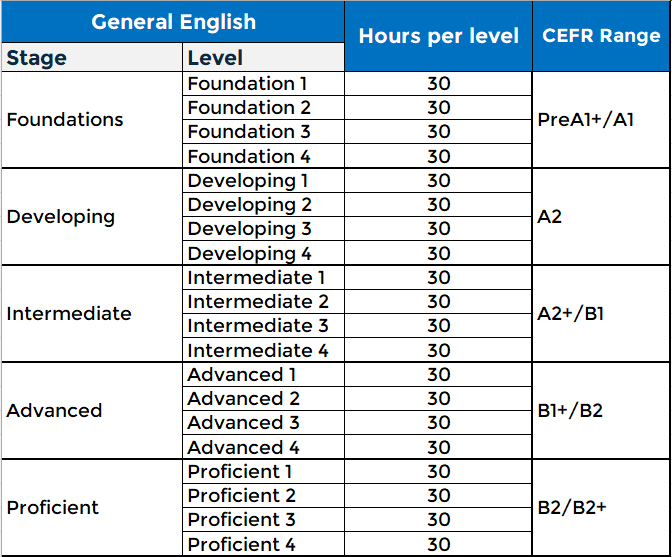


GENERAL ENGLISH COURSES | AMIDEAST EGYPT


What can a A1-level learner 


of English do?


An A1-level learner of English, also known as a Beginner 

or Breakthrough level, can perform basic tasks and 

participate in simple conversations. Here are some of

 the specific things an A1 learner can do in detail:


Greetings and Introductions


Say hello, goodbye, and basic greetings like "Good 

morning" or "How are you?"


Introduce themselves with simple phrases:

 "My name is..." and ask others’ names:

 "What is your name?"


Personal Information


Talk about personal details such as age ("I am 20 years 

old"), nationality ("I am from Spain"), and occupation

 ("I am a student").

Describe their family: "I have a brother and a sister."


Numbers and Dates

Count from 1 to 100.

Say the date and day of the week:

 "Today is Monday," "It is the 5th of April."


Basic Vocabulary and Phrases


Use common words for everyday objects and places: 

"book," "pen," "school," "market."


Understand and use simple phrases like

 "I like," "I want," "I need," "Can I...?"


Simple Communication in Daily Life


Ask and answer questions about basic needs:

 "Where is the bathroom?" "How much is this?"


Order food and drinks in a café: 

"I would like a coffee, please."


Make simple requests: "Please," "Thank you," "Sorry."


Describing People and Places


Describe people using basic adjectives:

 "He is tall," "She is happy."


Describe places briefly:

 "The school is big," "The park is nice."


Basic Reading and Writing


Read and understand short, simple texts like signs, 

menus, and postcards.


Write very simple sentences or fill in basic forms,

 like filling in personal details.


Understanding Spoken English

Comprehend slow, clear spoken language about 

familiar topics.

Respond with simple answers or gestures.


Basic Grammar

Use simple verb forms in the present tense: 

"I work," "She likes."


Use basic pronouns: 

"I," "you," "he," "she," "it," "we," "they."


Form very simple questions and negatives:

 "Do you like it?" "I do not understand."


In summary,
an A1 learner can handle very basic 

communication in familiar situations, give simple personal 

information, understand and use everyday expressions, 

and participate in straightforward interactions.


English Language Courses | English Language Courses


What can a A2-level learner 


of English do?


An A2-level learner of English, also known as an 

Elementary user, can perform a variety of basic language 

tasks with some confidence. 


Here are the key abilities they typically have,

 detailed by language skills:


Listening:


Understand familiar words and simple phrases related 

to personal information, shopping, directions, and daily

 routines.


Comprehend short, clear messages and notices,

 such as simple announcements or instructions.


Follow simple spoken conversations if the topic is 

familiar and speech is slow and clear.


Reading:


Read very short, simple texts, such as signs, notices, 

menus, and basic personal letters.


Understand common expressions and everyday 

vocabulary in context.


Find specific information in simple texts, like a timetable 

or a fare chart.


Speaking:


Use basic phrases and sentences to describe themselves, 

their family, and their surroundings.


Ask and answer simple questions about personal details,

 such as where they live, what they do, and their hobbies.


Participate in basic conversations on familiar topics, 

provided the other person speaks slowly and clearly.


Use common expressions for shopping, ordering food, 

or making simple arrangements.


Writing:


Write short, simple notes and messages, such as 

postcards or reminders.


Fill in forms with personal details, like name, address,

 and nationality.


Write a few sentences about familiar topics, such as 

hobbies or daily routines, with basic vocabulary and 

simple sentence structures.


Vocabulary:


Use approximately 1000-1500 basic words and

 phrases related to everyday life.


Understand and use common vocabulary for

 shopping, family, work, and leisure.


Grammar:


Use basic present tense forms (e.g., “I go,” “she studies”)

 and simple past tense.


Form simple sentences with subject-verb-object structure.


Use basic question forms and negatives.


Understand and use some common prepositions

 (e.g., in, on, at) and articles (a, an, the).


Overall, an A2 learner can handle simple 

communication in familiar situations, understand 

straightforward spoken and written language,

 and produce basic sentences to express their 

immediate needs and personal information.


Advanced English Language > Training Course for Teachers


What can a B1-level learner


 of English do?


A B1-level learner of English, often referred to as an 

intermediate user, can perform a variety of

 communicative tasks with a reasonable degree

 of confidence and independence. Here are the key 

abilities in detail:


1. Reading Skills:


Understand the main points of clear standard texts on 

familiar topics such as work, school, leisure, and travel.


Read and comprehend simple articles, reports, 

and instructions.


Identify specific information in texts like advertisements, 

menus, schedules, and notices.


Get the gist of longer texts or stories, even if some 

details are unclear.


2. Listening Skills:


Understand the main ideas of clear speech on familiar 

subjects delivered in standard language, such as 

conversations, radio broadcasts, or announcements.


Follow the main points in narrated stories or descriptions, 

particularly when the topic is familiar.

Recognize the speaker’s attitude or feelings in spoken 

language when expressed clearly.


3. Speaking Skills:


Handle most situations that might arise while traveling

 in areas where English is spoken.


Describe experiences, events, dreams, and ambitions, 

and briefly give reasons for opinions.


Participate in conversations on familiar topics by asking 

and answering questions and expressing opinions.


Use simple language to explain the meaning of words

 or phrases when communicating with others.


4. Writing Skills:


Write simple connected texts on familiar topics, 

such as personal letters, postcards, or emails.


Describe experiences, people, places, and plans in a 

straightforward manner.


Write summaries of texts or stories, including main

 points and some details.


Fill in forms with personal details (name, address, etc.).


5. Grammar and Vocabulary:


Use basic grammatical structures correctly, including

 simple tenses (present, past, future), comparatives, 

superlatives, and some modals.


Show some control of common phrases and expressions

 used in everyday communication.


Use a vocabulary range sufficient for everyday topics, 

including common verbs, nouns, adjectives, and adverbs.


6. Socio-linguistic Competence:


Understand and use polite forms and common social 

expressions.


Recognize cultural norms in basic social interactions 

like greetings and farewells.


Express needs, preferences, and opinions 

appropriately in familiar contexts.


In summary:


A B1 learner can communicate effectively in routine 

situations, understand the main points of spoken and 

written texts on familiar topics, and express 

themselves in a simple way about familiar subjects.


 They are developing independence but may still 

encounter difficulties with complex language

 structures or unfamiliar topics.


English Language Schools, High School and Summer Program


What can a B2-level learner of English


 do?


A B2-level learner of English, according to the Common 

European Framework of Reference for Languages 

(CEFR), is considered an upper-intermediate user. 


At this stage, they can perform a wide range of complex 

language tasks with a good degree of fluency and 

accuracy. Here is a detailed overview of what a

 B2 learner can do:


1. Listening Skills:


Understand the main ideas of complex spoken texts on 

both concrete and abstract topics, including technical 

discussions in their field of specialization.


Follow extended speech and lectures and identify the 

speaker's attitude or mood.


Comprehend most TV news, current affairs programs,

 and films with familiar content.


2. Reading Skills:


Read articles and reports concerned with contemporary 

problems in which the writers adopt particular attitudes

 or viewpoints.


Understand the main ideas of complex texts on both 

familiar and unfamiliar topics, including technical

 language related to their interests or profession.


Identify relevant details, opinions, and arguments

 within texts.


3. Speaking Skills:


Interact with a degree of fluency and spontaneity that 

makes regular interaction with native speakers quite 

possible without strain for either party.


Actively participate in discussions on familiar topics, 

expressing and justifying opinions.


Present clear, detailed descriptions on a wide range of 

subjects related to their interests.


Explain a viewpoint on a current issue giving the 

advantages and disadvantages of various options.


4. Writing Skills:


Write clear, detailed texts on a wide range of subjects 

related to their interests.


Write essays or reports, passing on information or giving 

reasons in support of or against a particular point of view.


Summarize the content of articles or reports,

 highlighting the main points.


Write letters or emails that raise issues or describe 

experiences.


5. Grammar and Vocabulary:


Use a broad lexical repertoire to discuss familiar and 

unfamiliar topics.


Handle complex grammatical structures accurately, 

including different tenses, conditionals, modal verbs, 

passive voice, and reported speech.


Use linking devices effectively to connect ideas logically.


6. Pragmatic and Socio-linguistic Skills:


Use appropriate language functions for different social 

contexts, such as giving opinions, agreeing/disagreeing, 

hypothesizing, and making suggestions.


Adjust language according to the formality of the situation.


In summary:


A B2 learner can understand the main ideas of complex

 texts, communicate fluently and spontaneously, produce 

clear and detailed texts, and handle most situations likely 

to arise while traveling or working in an environment 

where English is used. 


They are approaching advanced proficiency but may still 

make mistakes with very subtle language nuances or in 

highly specialized contexts.


English Courses - Direct English


What can a C1-level learner of 


English do?


A C1-level learner of English, according to the Common

 European Framework of Reference for Languages 

(CEFR), is considered an advanced user. They can 

understand a wide range of demanding, longer texts, 

and recognize implicit meaning. 


They can express themselves fluently and 

spontaneously without much obvious searching for 

expressions. Here is a detailed overview of what 

a C1 learner can do in various language skills:


Listening Skills:


Understand extended speech even when it is not

 clearly structured.


Comprehend television programs, films, and radio 

broadcasts with idiomatic expressions and 

colloquialisms.


Follow complex arguments and detailed explanations

 in lectures or discussions.


Recognize subtle differences in tone, irony, and 

attitudes.


Reading Skills:


Read a wide variety of demanding, longer texts such

 as academic articles, literary works, and detailed 

reports.


Understand implicit and explicit meanings, 

nuances, and stylistic features.


Identify the writer’s attitude, tone, and purpose.


Summarize information from different sources 

coherently.


Speaking Skills:


Express ideas fluently and spontaneously without

 much obvious searching for expressions.


Use language flexibly and effectively for social, 

academic, and professional purposes.


Present clear, detailed descriptions and arguments.

Engage in complex conversations, debates, or 

negotiations, demonstrating control over discourse 

markers and cohesive devices.


Use idiomatic expressions and colloquialisms 

appropriately.


Writing Skills:


Produce well-structured, detailed texts on complex 

subjects, showing controlled use of organizational 

patterns.


Write essays, reports, proposals, and reviews with

 a clear argument, appropriate style, and a variety 

of sentence structures.


Demonstrate accuracy in grammar, vocabulary,

 and punctuation.


Adapt language style to different contexts and

 audiences.


Grammar and Vocabulary:

Use a wide range of grammatical structures accurately, 

including complex sentences, passive voice, and 

conditionals.


Employ a rich and precise vocabulary, including 

idiomatic expressions, phrasal verbs, and specialized 

terminology.


Show awareness of nuance and register, adjusting 

language accordingly.


Overall Communication:


Demonstrate independence in language use, with 

minimal reliance on dictionaries or translation.


Handle unpredictable language situations with 

confidence.


Understand cultural references and idiomatic 

expressions typical of native speakers.


In summary:


A C1 learner can communicate effectively and flexibly

 in most contexts, produce clear, well-structured, 

detailed texts, and understand a wide array of 

complex spoken and written language. 


They are approaching near-native proficiency, capable

 of engaging confidently in academic, professional, 

and social settings.


English Course in Brighton over 30 - Full-immersionEnglish CoursesEnglish Courses


What can a C2-level learner of


 English do?


A C2-level learner of English, also known as a proficient

 or mastery-level user according to the Common 

European Framework of Reference for Languages 

(CEFR), possesses advanced language skills that 

enable them to operate with near-native fluency and 

comprehension. 


Here is a detailed overview of what a C2 learner 

can do across various language competencies:


Listening Skills


Understand virtually all types of spoken language, 

including abstract, complex, and idiomatic expressions.


Follow extended speech even when it is not clearly 

structured or when speakers use colloquialisms, 

regionalisms, or fast-paced speech.


Grasp subtle nuances, humor, irony, and implied 

meanings in conversations, lectures, debates, and

 media broadcasts.


Reading Skill


Read and comprehend a wide range of demanding

 texts, including literary works, academic articles,

 technical manuals, and newspapers.


Recognize implicit meanings, tone, and stylistic features.


Analyze complex arguments, identify assumptions, 

and evaluate the author's intent and perspective.

Summarize, paraphrase, and critique texts effectively.


Speaking Skills


Express ideas fluently and spontaneously without 

much obvious searching for words or expressions.


Use language flexibly and effectively for social,

 academic, and professional purposes.


Present clear, well-structured, detailed descriptions, 

arguments, and narratives.


Engage in discussions, negotiations, and debates 

with ease, demonstrating awareness of subtlety and 

nuance.


Use idiomatic expressions, colloquialisms, and a

 wide range of vocabulary appropriately.


Writing Skills


Write clear, well-structured, and detailed texts on

complex subjects, demonstrating control over style,

 tone, and register.


Produce essays, reports, proposals, and creative texts 

with coherence and cohesion.


Use a wide range of vocabulary and grammatical 

structures accurately and appropriately.


Edit and revise texts to improve clarity, tone, 

and effectiveness.


Grammar and Vocabulary


Master a broad and precise vocabulary, including 

idiomatic expressions, phrasal verbs, and technical 

terminology.


Use complex grammatical structures accurately,

such as advanced clause structures, conditionals,

 passive voice, and subjunctive mood.


Demonstrate control over stylistic nuances, register, 

and formal/informal language variations.


Pragmatic and Cultural Competence


Understand and appropriately respond to cultural 

references, humor, and social norms.


Recognize and interpret cultural nuances and 

implied meanings in various contexts.


Adapt language use to different situations, audiences,

 and purposes.


Critical Thinking and Analytical Skills


Critically evaluate information, arguments, and viewpoints.


Synthesize ideas from multiple sources.


Engage in abstract reasoning and hypothetical scenarios.


In summary:


a C2-level learner can function almost as a native

 speaker in most contexts, demonstrating mastery

 over language skills that allow for effective 

communication in academic, professional, and 

social settings with precision, nuance, and cultural 

awareness.


Choose The Course You Want – English Direct Language School


What can a Professional level learner of


 English do?


A professional-level learner of English demonstrates 

advanced proficiency across all language skills—

listening, speaking, reading, writing, and communication

—enabling effective and nuanced use of the language in

 diverse contexts. 


Here's a detailed overview of what such a 

learner can do in each area:


Listening:


Understand a wide range of spoken English, including 

complex and abstract topics such as academic lectures, 

professional discussions, negotiations, and media 

broadcasts.


Comprehend various accents, dialects, and speech 

rates, even in fast-paced or informal conversations.


Discern subtle nuances, implied meanings, humor,

 and emotional undertones.


Follow extended arguments or narratives and identify

 key points, supporting details, and underlying themes.


Take effective notes during lectures or meetings, 

capturing essential information accurately.


Speaking:


Communicate fluently and spontaneously with a high 

degree of accuracy.


Use a broad vocabulary and idiomatic expressions 

appropriately in both formal and informal contexts.


Present ideas, opinions, and arguments clearly and 

convincingly, employing appropriate tone, register, 

and body language.


Engage in negotiations, debates, and professional 

discussions with confidence.


Adapt speech style to suit different audiences and 

purposes, including delivering presentations or

 leading meetings.


Handle unexpected questions or topics with 

agility and poise.


Reading:


Read and comprehend complex texts such as academic 

papers, technical reports, business documents, and 

literature.


Analyze and interpret information, identifying main ideas,

arguments, and supporting evidence.


Recognize rhetorical devices, tone, and purpose

 in various texts.


Summarize, critique, and synthesize information

 from multiple sources.


Read rapidly and efficiently, adjusting reading strategies 

according to purpose (skimming, scanning, detailed 

reading).


Writing:


Produce clear, well-structured, and cohesive texts suited 

to professional purposes, including reports, proposals, 

emails, and articles.


Use advanced grammatical structures accurately and 

appropriately.


Demonstrate a rich vocabulary with precise word choice.


Adapt writing style and tone according to audience, 

purpose, and context.


Edit and revise texts effectively to improve clarity, 

coherence, and correctness.


Incorporate citations and references properly in 

academic or professional writing.


Communication


(Interpersonal and Presentation Skills):


Engage in effective interpersonal communication, 

demonstrating active listening, empathy, and 

responsiveness.


Convey complex ideas clearly and persuasively

 in both spoken and written forms.


Use appropriate non-verbal cues, gestures, 

and intonation to enhance understanding.


Lead discussions, facilitate meetings, and deliver 

compelling presentations.


Negotiate, persuade, and resolve conflicts diplomatically.


Adapt communication strategies to multicultural and 

multilingual environments.


Vocabulary Proficiency:


Extensive Range: 

Possesses a vast and nuanced vocabulary, including

 both common and specialized terminology across

 various fields such as business, science, arts, and 

technology.


Idiomatic Expressions: 


Uses and understands idioms, phrasal verbs, and 

collocations naturally, making speech and writing

 more fluent and native-like.


Synonyms and Nuance: 


Differentiates subtle meanings between synonyms and 

chooses words precisely to match context and tone.

Register and Style: Adapts vocabulary to suit different 

registers—formal, informal, technical, literary, etc.—

appropriately.


Collocations and Phrasal Verbs:


 Uses common and advanced collocations and phrasal 

verbs correctly, enhancing naturalness.

Word Formation: Demonstrates understanding of

 prefixes, suffixes, and roots to expand vocabulary 

and understand unfamiliar words.


Grammar Proficiency:


Complex Sentence Structures: 


Constructs and comprehends complex and compound

 sentences, including subordinate clauses, relative 

clauses, and conditional sentences.


Tense and Aspect: 


Uses all tenses accurately and appropriately, including 

perfect, continuous, and perfect continuous aspects,

 in both written and spoken language.


Modal Verbs:


 Applies modal verbs correctly to express ability, 

permission, obligation, probability, and deduction.

Passive and Active Voice: Uses passive and active 

constructions with ease, understanding their

 nuances and appropriate contexts.


Reported Speech: 

Masters direct and indirect speech, including complex 

reporting structures.


Advanced Grammar Points: 

Uses advanced grammatical structures such as 

inversions, subjunctive mood, and ellipsis correctly.


Agreement and Consistency: 


Maintains subject-verb agreement and tense 

consistency across sentences and paragraphs.


Punctuation and Syntax: 

Applies punctuation rules accurately to clarify meaning 

and structure sentences effectively.


A professional-level learner of English, especially in 

the context of interaction, critical thinking, and analytical 

skills, can perform a wide range of advanced language 

tasks and engage effectively in complex communicative 

and intellectual activities. Here is a detailed overview:


Interaction Skills


Fluent Communication: Engage in conversations with 

native or proficient speakers smoothly and confidently, 

expressing ideas clearly and appropriately for various 

contexts.


Discourse Management: Initiate, maintain, and 

conclude discussions effectively, using appropriate turn-

taking, politeness strategies, and conversational cues.


Negotiation and Persuasion: Convincingly argue 

points of view, negotiate terms, and influence others 

using nuanced language.


Cultural Awareness:


Understand and adapt to different social norms,

 idiomatic expressions, and cultural references,

facilitating meaningful intercultural interactions.


Professional Communication: Use formal and

 informal registers appropriately in diverse settings 

such as meetings, presentations, and networking events.


Critical Thinking Skills


Analyzing Arguments: Assess the validity, coherence, 

and strength of arguments presented in spoken or 

written form.


Evaluating Information: Critically examine sources 

of information, identify biases, and discern facts from 

opinions.


Problem-Solving: Use logical reasoning to approach 

complex problems, generate solutions, and articulate 

reasoning processes clearly.


Questioning Assumptions: Challenge underlying 

assumptions in arguments or discussions, fostering 

deeper understanding and insight.


Synthesizing Ideas: Combine information from multiple

 sources to form well-rounded judgments or new 

perspectives.


Analytical Skills


Textual Analysis: Interpret and analyze various 

types of texts (articles, reports, literature) for themes,

 tone, rhetorical devices, and implications.


Data Interpretation: Understand and discuss data 

presented in charts, graphs, or reports, extracting 

meaningful conclusions.


Research Skills: 

Conduct research using English-language sources, 

evaluate their credibility, and synthesize findings 

coherently.


Argument Construction:

Develop logical, evidence-based arguments in spoken

 or written form, tailored to specific audiences and 

purposes.


Critical Reflection: 

Reflect on personal learning, biases, and perspectives, 

enhancing self-awareness and intellectual growth.


Practical Applications


Participating in academic discussions, debates, 

and seminars.


Producing high-quality reports, essays, and presentations.


Engaging in professional negotiations, interviews,

 and consultations.


Analyzing media content, literature, or research for 

academic or professional purposes.


Contributing to policy discussions, strategic 

planning, and collaborative projects.


Overall Attributes:


Demonstrate cultural awareness and sensitivity in 


communication.


Exhibit confidence and professionalism in all language 

use.


Continuously refine language skills through self-

assessment and ongoing learning.


Summary


In summary, a professional-level learner of English 

equipped with advanced interaction, critical thinking, 

and analytical skills can communicate effectively,

 evaluate complex information critically, and produce 

sophisticated written and spoken content suitable for 

academic, professional, and intercultural contexts.


This level of proficiency allows a learner not only to

participate effectively in professional environments but 

also to contribute to discussions, lead projects, and 

engage with complex texts and ideas confidently and 

competently.


Skills to teach


English
.


A) 21st Century Skills


1-Critical Thinking


2-Problem Solving


3-Creativity & Innovation.


4-Cultural understanding.


5-Communication.


6-Media Literacy


7- / Digital Literacy  / 


/ Computing & ICT  /


 / Technology Literacy  /


8-Cultural Awareness.


9-Sustainability.


10-Collaboration.

1- Critical thinking  ( 1 ).


2- Critical thinking  ( 2 ).


3-Diversity


4-Social Skills


5-Initiative & Flexibility


6-Resources, material, methods


7-A model Lesson Plan


8-Novel lesson plan


9-Assessment & Evaluation.


10-Curriculum Analysis


11-Curriculum Design


12-Active Learning Training


13-Social Skills


Flag Counter


Tweet
Tweet

Make a free website with Yola